
The Niche Report
A sports column that explores eight overlooked college sports through creative storytelling and real reporting. Written by Amanda Sekili.


College sports are often understood through the noise that surrounds them. Stadium lights, scores, and televised seasons create an image of athletics that centers the biggest programs and the most visible teams. But countless athletic communities exist in quieter corners of campus. They gather in dance studios, climbing gyms, cold rinks, and recreation fields at dusk. Their work happens early in the morning, late at night, or in small rooms where only teammates see the effort.
The Niche Report explores eight of these overlooked sports at the University of Illinois. Each story blends creative nonfiction and reporting to illuminate a different athletic world. These are the spaces where students build discipline, identity, connection, and community far from the spotlight. These stories show what it means to commit to something that most people never notice.
Story 1: Illini Wushu
Precision, Culture, and the Weightless Moment
Photos courtesy of the Illinois Wushu Club Instagram (@illiniwushu), accessed December 2025.
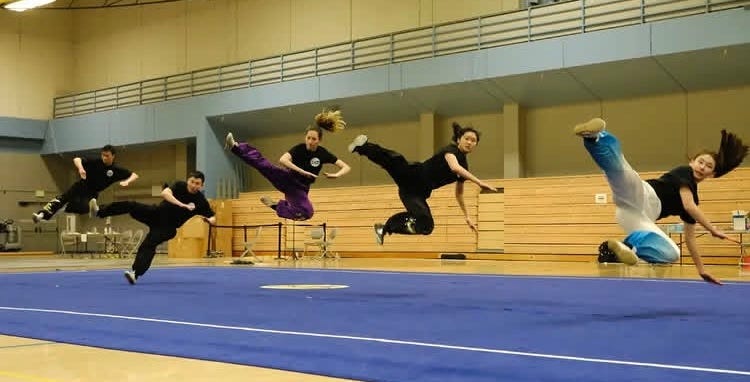
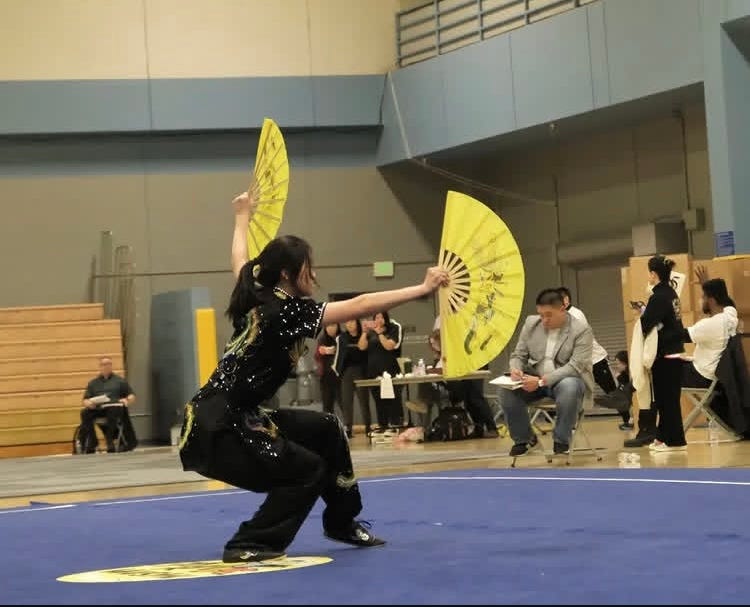
Wushu at Illinois is a sport made of speed, artistry, cultural expression, and personal identity. For athlete George Wu, wushu is not only a physical discipline but also a way to understand himself. He explained that the version of himself that arrives depends on the moment. During practices he becomes a friendly, welcoming teacher, someone who wants beginners to feel comfortable learning choreography, exercising, and joining the group. During performances and competitions his mindset narrows into pure concentration. He focuses on pacing, technical corrections, and the internal rhythm of each form. Practice is communal. Performance is disciplined and inward.
Wushu also connects George to his cultural identity in a way nothing else does. Teaching beginners, performing with other campus groups, and sharing wushu traditions allow him to bring an aspect of Chinese culture to UIUC in a form that is expressive and accessible. For him the sport is physical movement but also a form of storytelling.
Movement expresses his personality most clearly. He described one of his favorite moments in his spear routine. He spins the spear horizontally above himself and drops into a limbo under it. From the inside the move feels fun and powerful, even if it might look odd from the audience. He likened the energy of wushu to the firebending styles from Avatar: The Last Airbender. The jumps, kicks, and dramatic movements mirror the show’s martial arts roots. Grace is appreciated in other forms, but George gravitates toward explosive sequences that feel closest to his natural style.
His journey is full of breakthroughs that arrived quietly. George spent nearly three years missing aerials by inches. Then one day the landing simply worked. No dramatic buildup or emotional release. Just a subtle realization that something had finally clicked. Many wushu barriers are mental and require athletes to commit fully. George often teaches beginners about posture, intentional movement, and the importance of carrying oneself with confidence both inside and outside of wushu.
Training remains central to his growth. At the school where he originally learned wushu, more than half of each practice was dedicated to warmups, strength training, and flexibility. Those foundational routines shaped everything that followed. The impressive moves spectators notice rely on slow, repetitive groundwork.
Before performing, George uses a simple ritual. A single deep breath in and out. With Illini Wushu he also focuses on beginners, making sure they feel prepared and supported. While emotions shift depending on the form, one moment remains universal. At the peak of a perfectly executed jump, there is a split second of weightlessness where time seems to pause.
Team culture at UIUC mirrors this balance of challenge and encouragement. George believes the club succeeded this year in creating an inviting environment for newcomers. Moving slowly through basics and warmups allowed everyone to learn together, and new members formed close friendships on their own. The social side of the club grew naturally.
Wushu has also revealed something about George’s motivation. After years of low energy during and after the pandemic, joining Illini Wushu helped him reconnect with people who share his passion. He found momentum again and saw real improvement in a single year.
Looking ahead, he hopes to combine advanced moves into a more complex set and strengthen the parts of his performance that lag behind. In five years he hopes wushu remains a way to stay active, build friendships, and stay connected to his culture.
Illini Wushu is not only a sport. It is a space where discipline meets personal expression. Through athletes like George Wu, the program continues to grow as a cultural and athletic force on campus.
Story 2: Illinois Climbing
Finding Trust on the Wall
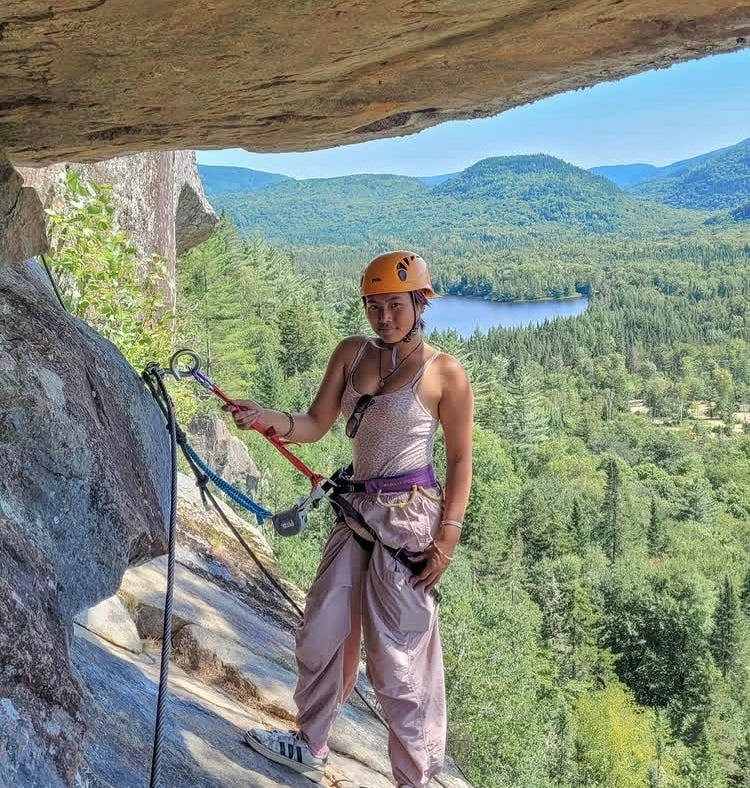
Image courtesy of Illinois Climbing Club Instagram (@illiniclimbingclub), accessed Nov 2025
Many people first meet climbing through birthday parties or summer outings. For Evan Short, those early experiences were recreational and scattered. But joining Illini Climbing transformed a casual interest into a structured workout, a consistent hobby, and a community that became part of everyday life.
Illini Climbing is one of the largest RSOs on campus with about 250 active members. Its mission is intentionally open. The club aims to make climbing accessible to anyone who wants to learn, no matter their background or experience level. Beginners climb beside lifelong athletes. According to Evan, this mix is the foundation of the group’s culture. Weekly open gym sessions, roped climbing days, clinics, and social events bring people together through shared curiosity rather than skill.
The difference between recreational and competitive climbing is smaller than many expect. Competitions simply create a structured environment, especially in bouldering meets where forty routes increase in difficulty. The pressure rises, but the supportive tone remains the same. Climbing may be individual in practice, but the atmosphere feels collective.
Some of Evan’s favorite memories come from the club’s outdoor trips to southern Illinois. Outdoor climbing is entirely different from the controlled symmetry of the gym. Heights feel higher. Holds feel unpredictable. Watching beginners conquer fears and trust their belayers creates a sense of connection that lasts long after the trip ends. Encouragement becomes the emotional backbone of these moments.
A misconception many newcomers hold is that climbing is upper body dominated. Evan highlights that climbing begins in the legs. Skilled climbers push from the lower body, stabilize through the core, and use technique to move efficiently. Straight or inclined walls require a precise balance between strength and technique.
Climbing also demands mental resilience. Evan explained that the fear of failing often outweighs the fear of falling. Climbers can feel the attention of people watching, which creates pressure. But that same attention allows the community to support them. Trust becomes a crucial part of rope climbing where belief in a belayer transforms a climber’s confidence.
This season Evan is focused on recovery. After breaking his thumb, he is working carefully to regain strength without reinjury. Climbing places significant strain on the fingers, so slow rehabilitation is essential.
Illini Climbing is a community built on support, persistence, and the belief that improvement is always possible. Whether athletes are reading a route for the first time or preparing for a competition, they find encouragement on the wall and beyond it. Evan’s story reflects what draws so many students to the group: a sense of belonging and the thrill of discovering what the body and mind can do.
Story 3: Illini Rowing
Rhythm, Trust, and the Fight to Stay Afloat
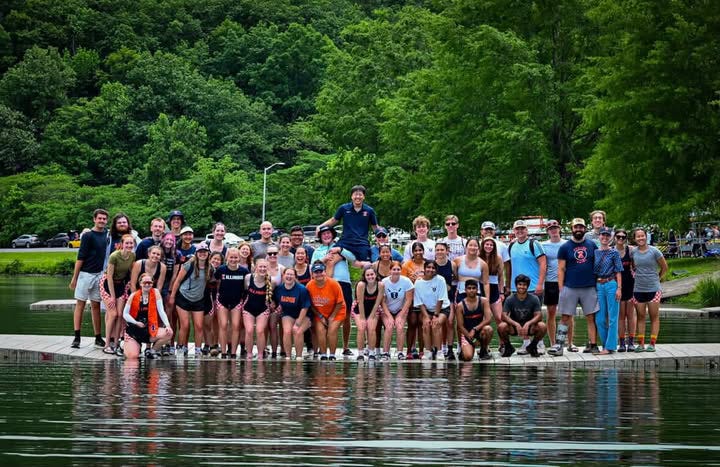
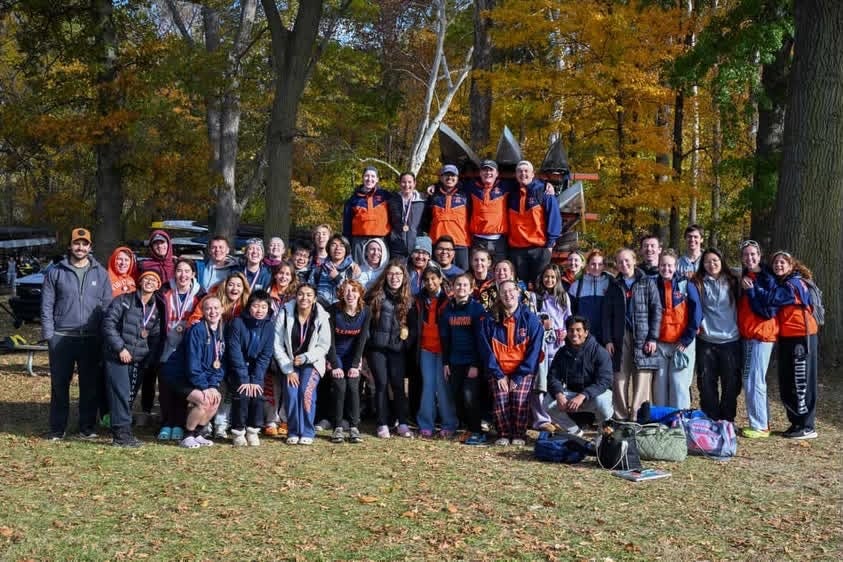
Photos courtesy of the Illinois Rowing Team Instagram (@illinirowing), accessed December 2025.
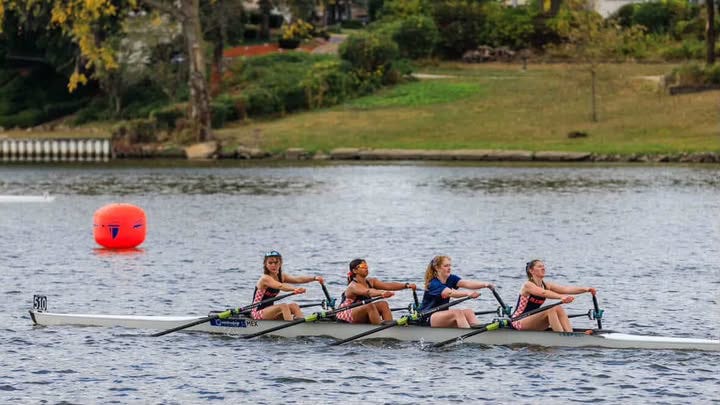
Rowing at Illinois is defined by rhythm. A boat moves across the water with a unified stroke, and for a moment everything aligns. The oar locks perfectly. The pressure shifts through the legs. The hull lifts just enough to feel weightless. Members described this instant as a change in the entire stroke. It shifts from feeling heavy and uneven to light, balanced, and connected. It is like lifting a weight alone compared to lifting with a synchronized group. Once the rhythm snaps into place, the boat becomes one motion, one breath, one shared intention.
The intensity rises dramatically during races. Rowers face backwards and cannot see which boats lead. Their world condenses into the coxswain’s voice, the burn in their legs, and the sound of the water sliding beneath them. The most intense moment occurs while overtaking another crew. After the coxswain calls for a sprint, rowers dig deeper, and small glimpses of the opposing shell appear in the corner of their eyes as the boats move past each other. Those brief seconds carry a surge of adrenaline, because it is one of the few moments in rowing when the race’s outcome becomes visible.
The relationship between rowers and coxswains is essential. The coxswain is the strategist, the voice, and the steady presence inside the boat. They steer the shell through tight lines during long fall races and set the precise calls that hold a crew together when fatigue spreads through the boat in spring sprints. Rowers rely entirely on this guidance. Trust must flow in both directions, because without alignment the shell cannot move the way it should. A good coxswain can turn a difficult race into one that feels purposeful and controlled.
Illini Rowing is also navigating a significant challenge. The team is working to fundraise for a boathouse at Clinton Lake in Farmer City. Without a permanent structure, the land contract will not be renewed and the team will lose its training site. The uncertainty adds emotional weight to every practice, because the water they row on now may not be there for them in the future. For a sport built on endurance and resilience, the fight to protect their home base has become just as important as the training itself.
Being part of Illini Rowing carries deep meaning for its athletes. Many spoke about finding close friendships within the team, relationships that make early morning practices feel purposeful instead of exhausting. There is a quiet sense of pride that comes from showing up in the dark, pushing through long workouts, and watching teammates grow stronger over time. The environment is friendly, encouraging, and grounded in the belief that a boat only moves well when everyone is invested in the same goal.
Illini Rowing is a portrait of unity and determination. Whether rowers are chasing perfect synchronicity or working to secure the future of their training site, their strength comes from the same source. It comes from moving together, believing in each other, and trusting that even the hardest strokes can become lighter when shared.
Story 4: Illinois Rise Ultimate Frisbee
The Spirit, the Work, and the Long Arc of Commitment
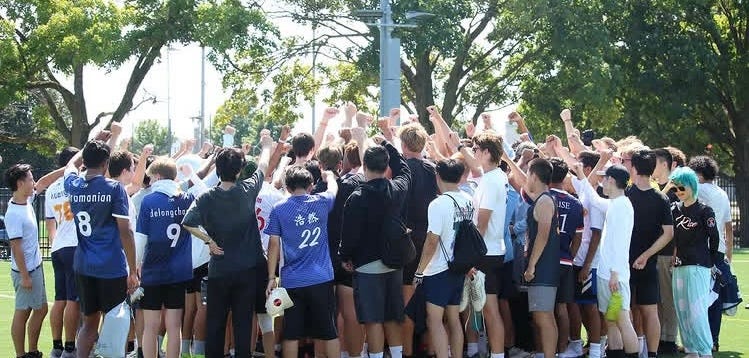
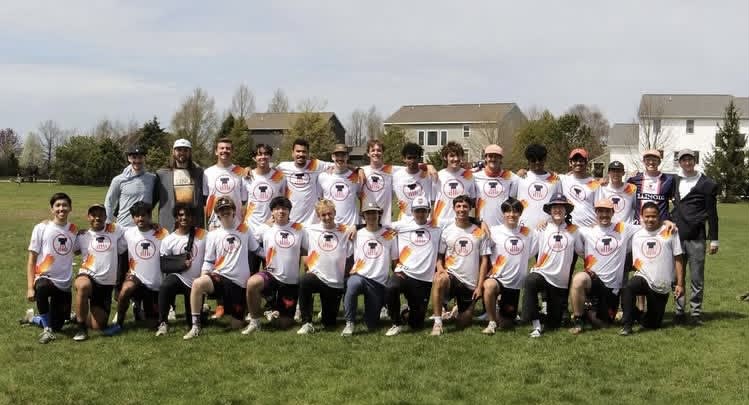
Photos courtesy of the Illinois Ultimate Frisbee Club Instagram (@illinois.rise), accessed December 2025.
On the recreation fields behind campus, the evening light softens into gold and the rhythm of warmups begins. Cleats tap against turf. Voices settle into focus. A disc rises cleanly into the sky and hangs there long enough to feel cinematic before landing in a sprinting player’s hands.
Ultimate appears gentle from a distance, but the closer the field becomes, the more intensity reveals itself. The sport is built on acceleration, sharp angles, and fast decision making. Players twist mid air, dive horizontally, and run patterns that feel closer to track and basketball than any casual image of frisbee.
A senior leader from the team described Ultimate at Illinois as a mix of ambition, integrity, and commitment. One misconception the club encounters is that students assume the sport is casual. The athlete explained that this assumption could not be further from reality.
“We are none of those. We play a 7v7 field sport and we want to win, truly above all else. We are out here to make nationals.”
Ultimate occupies a unique place in college athletics. It is not a varsity sport, but it competes at the highest level the sport offers. There is no division above it. This creates a hybrid identity that combines the structure of elite competition with the informality of a student led team.
“Other club sports compete for second tier championships. We compete at the top,” he wrote.
One of the defining features of Ultimate is Spirit of the Game. The sport relies on self officiation and expects players to call their own fouls and resolve disputes honestly. This structure depends on trust and creates an environment where athletes must demonstrate maturity and integrity even in the heat of competition.
The physical demands intensify that emotional expectation. Practices open with warmups that transition into sprints, film inspired drills, and agility circuits. Conditioning is required. Every athlete completes at least one conditioning session outside of practice each week. Recently the team has incorporated fan bike intervals that push players to their limits.
Because the sport is self funded, tournaments replace single games. Teams often play seven or eight matches across two days. The volume of explosive movement and short recovery windows creates strain on the body. Players frequently manage knee pain, shoulder tightness, and back fatigue. Yet they continue to build toward higher goals.
Culture forms through this work. Athletes who flourish in the program are defined by their desire to improve. Some of the team’s strongest contributors arrived with no background in the sport. Their transformation came from commitment and consistent effort.
The team’s most cherished tradition is Weekback, the week before spring classes begin. The campus is cold and quiet, and players return early to train, compete in team challenges, and build connections. Weekback marks the moment when the team becomes a collective rather than a group of individuals.
“If you asked every player when the team first felt real, you would hear the same thing. Weekback. That was when I realized this is what I want defining my college years.”
Every team has a single word that captures its energy. For UIUC Ultimate that word is committed. Players condition when no one is watching. They study film between classes. They carpool across the Midwest for tournaments few students know about. That commitment gives the sport its emotional resonance.
When asked to share one moment that embodies the beauty of Ultimate, the athlete pointed to a clip from sophomore Eric Cai. In the video Cai launches into a full horizontal layout to catch the disc. For a moment his body seems suspended above the field.
“The most fun part of Ultimate is laying out,” the leader wrote. “It happens all the time.”
Ultimate at UIUC is defined by endurance, integrity, and joy. It is a sport sustained by athletes who show up for each other, learn with intention, and push toward goals not everyone sees. Under the warm light of the rec fields, the sport becomes something more than a game. It becomes a community shaped by honesty, effort, and belief in the team.
Story 5: Illini Ridgebacks Quadball Team
Chaos, Strategy, and the joy of the Impossible
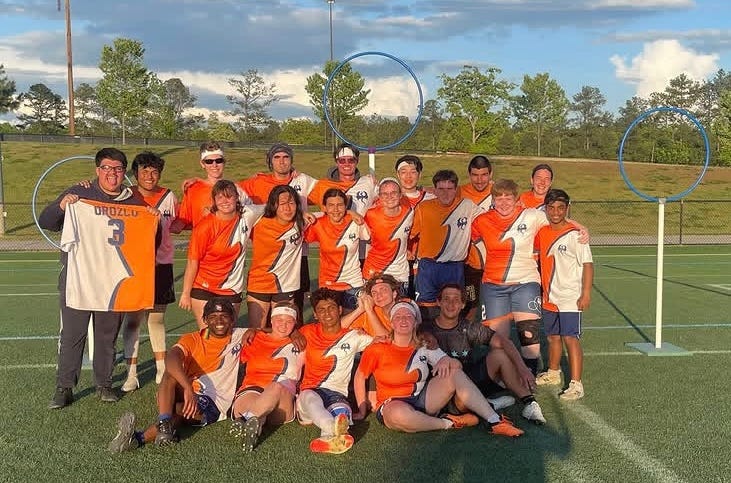
Photo courtesy of the Illini Ridgebacks Quadball Team Instagram (@illiniridgebacks), accessed September 2025.
Before the rules make sense, quadball introduces itself through motion. The field pulses with activity. Chasers sprint with a volleyball tucked close. Beaters launch dodgeballs to disrupt plays. The keeper calls out instructions from near the hoops. Seekers stretch and prepare for the moment the snitch runner enters the pitch. Everyone carries a broom between their legs, a detail that looks humorous at first but gradually becomes part of the sport’s rhythm.
Quadball can feel overwhelming in the beginning. Six players weave in patterns, four balls move at once, and the field seems to vibrate with contact. Slowly, beneath the noise, strategy reveals itself. The sport becomes a network of roles, responsibilities, and decisions.
According to Sohum Sharma, president of the Illini Ridgebacks, quadball’s apparent chaos is part of its charm.
“Quadball looks chaotic the first time you watch it. Chasers are trying to score with a volleyball, beaters are throwing dodgeballs, and once the snitch comes out in the second half, the seekers are chasing it nonstop. A lot happens at once, but that is what makes it fun.”
Each role contributes to the movement of the game. Chasers move the quaffle and score by sending it through one of three hoops. Keepers direct transitions and protect those hoops. Beaters use dodgeballs to control tempo, eliminating players temporarily. Seekers chase the snitch runner, a fast and evasive athlete with a flag attached. The game ends only when the snitch is caught, although the catch does not guarantee a win.
The physical demands hide behind the sport’s unusual appearance. Quadball is full contact and requires sprinting, pivoting, absorbing tackles, and maintaining balance while managing the broom. The sport blends elements of rugby, basketball, dodgeball, and wrestling. Awareness must extend across the entire pitch.
Sohum laughed when describing the hardest part of the game. “Keeping track of all four balls. Your awareness has to be everywhere.” He emphasized that quadball is more serious than people assume. “The broom is not a prop. It is part of the game. It is kind of like dribbling a basketball. You have to manage balance and control.”
The Illini Ridgebacks train like any competitive team. Practices include warm ups, position specific drills, split field work, and full scrimmages. Every session has structure and intention.
What sets quadball apart is its inclusivity. Players join from different backgrounds, sports histories, and skill levels. Because few people grow up with quadball, everyone learns together. The Ridgebacks compete in a national network with more than thirty college teams.
Sohum shared one detail that highlights the sport’s reach.“I actually played for Team India at the Quadball World Cup. They reached out to me after someone referred me.”
Quadball at Illinois is part of a global athletic community, one that blends creativity with competition. The Ridgebacks welcome new members each semester and encourage anyone who is curious to attend practice. Quadball thrives on energy, unpredictability, and genuine connection. From the outside it appears chaotic. From the inside it becomes a rhythm of movement, trust, and ambition that keeps athletes returning for more.
Story 6: Illini Fencing
Discipline, Distance, and the Courage to Commit
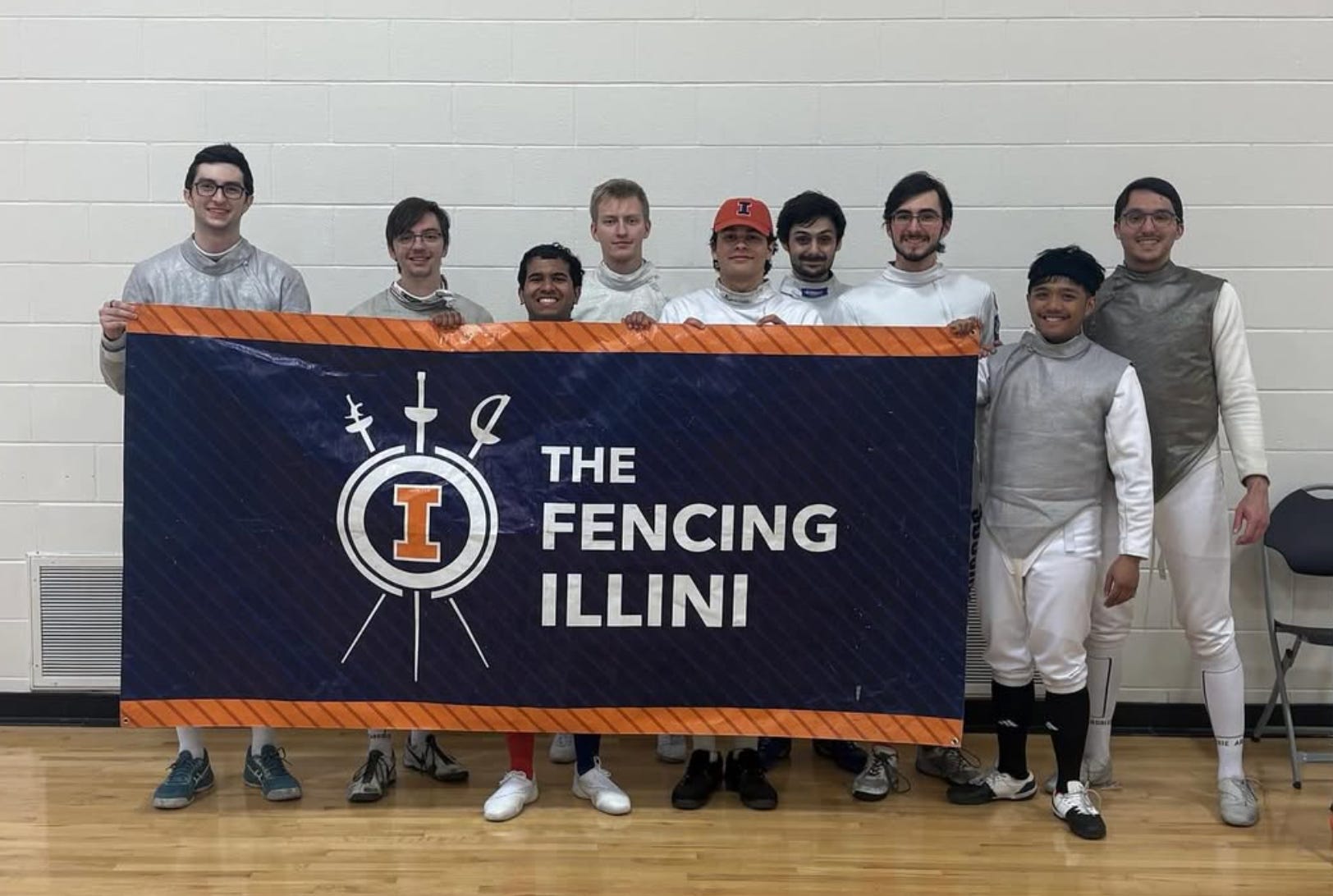
Photo courtesy of the Illini Fencing Club Instagram (@fencingillini), accessed November 2025.
Fencing at Illinois is a sport defined by sharp pauses, quick decisions, and layers of strategy compressed into five second bursts of action. Ray Richardson described the experience of being inside a bout as unusually raw. While competing, the strip becomes its own sealed environment. Coaches shout from the sidelines. Other bouts unfold nearby. Spectators react to every touch. Despite all of this noise, a fencer must learn to filter everything out and focus on the opponent alone. Every touch resets the bout. Each halt forces a mental recalibration. Fencing becomes a continuous cycle of thinking, adjusting, and searching for the next opening.
Ray remembers the exact moment the sport captured him. During his first practice at a club in Chicago, the coach taught basic movement and footwork. With twenty minutes left, the coach told everyone to suit up. Ray had not expected to fence during practice. He turned to a teammate who confirmed that they fenced every time. That realization shifted something. The idea of doing the real sport instead of only drills made fencing feel different from every other activity he had tried.
There is a part of fencing he wishes more people understood. The sport is expensive and often inaccessible. Club memberships can cost hundreds per month. Tournaments range from forty to three hundred dollars to enter. Gear can total several hundred dollars, and high quality blades alone are costly. Fencing requires dedication, technical training, and strategic awareness, yet many students never have the opportunity to try it.
One of the most difficult skills for new fencers is distance. Distance determines control of a bout. Perfect distance allows a fencer to threaten without being threatened. It looks effortless from the outside, but Ray explains that distance changes with every opponent depending on height, weapon choice, and individual style. It is a foundational skill and one of the hardest to master.
Ray fences epee, the slowest of the three weapons. A common fencing joke describes the personalities tied to each one. Foil is for cautious thinkers, sabre is for high energy athletes, and epee is for those who thrive under unpredictable conditions. Only in epee can both fencers score at the same time. Because the entire body is a target and timing determines strategy, epee bouts can be slow, methodical, and full of risk. Ray enjoys that freedom. Epee allows variation and creativity. Elite athletes succeed with entirely different approaches.
One of Ray’s most memorable matches took place in 2022 at an A2 rated tournament. He had fenced for three years but had never earned a rating. To do so he needed to place at least twelfth. Pools went poorly, but he won his first direct elimination bout through a fortunate matchup. His second opponent had already beaten him earlier in the day. The bout stayed close and entered priority. One minute. First touch wins. Ray had priority and could see the clock. His opponent could not. With seven seconds left he sensed his opponent preparing to attack. Instead of waiting for the clock to run out, he lunged and scored. In one moment he went from unrated to a C, a milestone that remains one of his proudest accomplishments.
Ray describes fencing as a combination of discipline, hard work, and community. He hopes the Illinois club continues to grow through its beginner friendly programs and aims to send more athletes to the National Club Championship. Rising membership and strong retention give him confidence in the team’s direction.
Fencing asks athletes to make brave decisions in small windows of time. Touch after touch, athletes learn to commit, reset, and commit again. For Ray Richardson, that challenge is what makes the sport unforgettable.
Club Accomplishments
Midwest Fencing Conference Championships
• Individual Men’s Epee Gold and Bronze Medals
• Individual Men’s Foil Silver Medal
• Individual Men’s Sabre Medal
• Team Men’s Epee Gold Medal
• Team Men’s Sabre Bronze Medal
Story 7: Illini Equestrian
Speed, Instinct, and the Unspoken Language Between Rider and Horse

Photos courtesy of the Illini Equestrian Team Instagram (@illini_equestrians), accessed December 2025.
Most students at Illinois spend their weekends in lecture halls or libraries, but Brian Zuckerman often spends his in a ring, guiding a thousand-pound horse through precise patterns and split-second decisions.
For Brian Zuckerman, equestrian sport began incredibly early. “I started riding when I was about two years old,” he said. After stepping away from the sport for several years, he returned during Covid and rediscovered how grounding and exciting riding could be. That return stayed with him. What keeps Brian committed is the uniqueness of the discipline, the technical skill required, the communication between rider and horse, and the feeling that no two rides are ever the same. “There is truly nothing like it,” he explained.
Brian rides in all three major rings: equitation, hunter, and jumper. Equitation focuses on the rider’s form and control. Hunter highlights the horse’s movement, rhythm, and smoothness. Jumper is the fast and strategic ring that revolves around speed, accuracy, and tight turns. Riders race the clock and try to avoid knocking poles while completing the course. A clean round moves them into the jump off. “Jumper is definitely the most entertaining of the three,” Brian said. “It is all about speed, control, and strategy.”
Training with Illini Equestrian looks very different from more traditional collegiate sports. The team participates in weekly group lessons that welcome every experience level. “We go from people who have never been on a horse to riders jumping three feet,” Brian said. These lessons also serve as preparation for competitions. Riders move up as they become more skilled and confident. “You earn your ribbon at the home barn and collect it at shows,” he explained.
Brian believes many people misunderstand the sport. “You do not have to compete in order to still get back on a horse,” he said. Equestrian is more accessible than people assume. The team culture reflects this openness. According to Brian, the environment at UIUC is one of the most rewarding parts of being on the team. “The team is amazing. We have a lot of social events throughout the year and we are all extremely good friends.”
The sport also comes with challenges, especially when it comes to confidence. A fall or a difficult ride can make even experienced riders hesitate. “That is one of the biggest things in riding. There are so many challenges, losing confidence from falling off or just not feeling right on the horse’s back,” he said. Rebuilding confidence takes time. Brian explained that the payoff can feel sudden and emotional. “Regaining that confidence takes a bit of effort, but when it pays off, it is always random. You will be at a show and finally get a beautiful clear round, and it just spikes your energy. That is the payoff.”
Brian wishes more students on campus understood that the sport is not as intimidating or out of reach as it seems. “Although riding horses is expensive, it is always a fun thing to try just once, and it is not just a pony ride,” he said. The team welcomes beginners, and the experience of riding, even a single time, can be grounding and memorable.
He also shared one final message for anyone curious about the sport. “Come try riding just once. There is no reason not to take the stress off and get on. It is the best thing to relax after a long day.” His invitation captures the spirit of Illini Equestrian, a community that values friendship, patience, and the quiet joy of being around horses.
Illini Equestrian combines athleticism, patience, strategy, and a deep relationship between horse and rider. It stands out as one of the most demanding and underrated niche sports at Illinois.
Story 8: Illinois Figure Skating
Edges, Air, and the Quiet Bravery Behind Every Glide
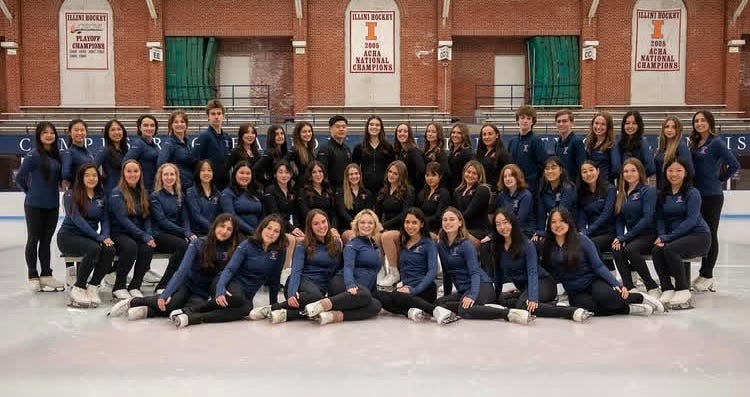
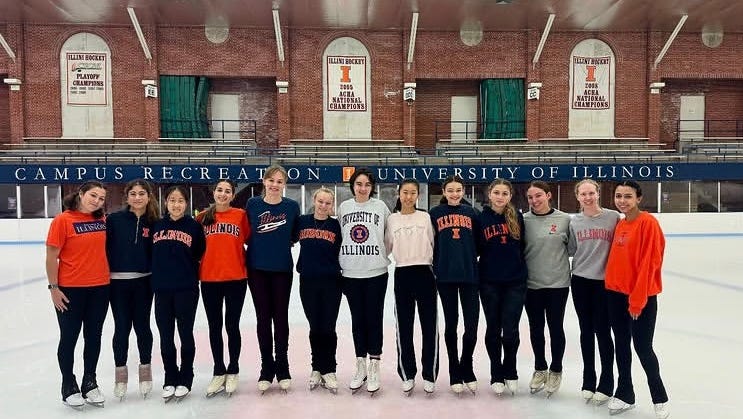
Photos courtesy of the Illinois Intercollegiate Figure Skating Team Instagram (@illinoisfigureskating), accessed December 2025.
There is something instantly calming about walking into the Illinois rink. The air feels colder, quieter, and a little brighter from the reflection of the ice. Skaters move in long gliding lines or fall into small circles with their friends, laughing after a jump that did not go as planned. Nothing about it feels intense or showy. It feels steady, almost gentle, like a place people return to because it brings them back to themselves. Illinois Figure Skating is still a young program on campus, but talking with Lydia made it clear that the team has already built its own kind of home. It is a community shaped by joy, resilience, and the small everyday moments that make you remember why you fell in love with a sport in the first place.
For Lydia, figure skating did not begin with years of childhood lessons. It began with a moment. “I started skating in 2018 after being inspired by the Olympic skaters and convincing my parents to let me try it,” she said. What started as curiosity turned into something she built her life around. That spark carried her all the way to the University of Illinois, where she now skates with a team that has grown faster than anyone expected.
Training with Illinois Figure Skating feels both structured and personal. The team practices together three days a week for three hours, filling the rink with the sound of blades against ice and the rhythm of repeated jumps. Outside of that, skaters create their own practice time in public freestyle sessions, chasing consistency and trusting the slow work of repetition. Skating is a sport that asks for independence and community at the same time, and this team reflects that balance.
Each semester includes one ice show and three competitions, with a fourth added only if the team qualifies for nationals. Testing is available virtually or through other rinks that host sessions. It is optional, but it helps skaters figure out where they belong competitively and what level they will skate at during meets. For a lot of the team, testing becomes a personal goal that sits alongside the shared goals of competition.
The demands of skating reach far beyond what most people see from the outside. “Skating is physically very demanding. We fall a lot and have a high risk of injury, mostly lower body injuries or concussions,” Lydia said. The jumps and spins that look effortless in performance come from hours of pushing the body into shapes and forces it was never naturally made to handle. The mental side can be just as intense. Many skaters find themselves comparing their progress to others or to their past selves. Some have worked through difficult or even traumatic experiences with former coaches, and learning to love the sport again becomes part of their healing.
Despite the intensity, the team environment at Illinois is one of the things Lydia is proudest of. The program began in Spring 2022 with only about five skaters. Today, nearly forty people are part of the group. Skaters come from every level, from beginners to those competing at higher divisions. “We are just a group of people who love to skate,” Lydia said. The team has kept that energy even as it has grown, focusing on encouragement, progress, and connection.
This season already includes a high point. At their first competition, Illinois placed eighth out of twenty three teams, a huge moment for such a young program. One skater won her junior level event, the team’s first medal in a freestyle event above intermediate. Moments like that feel good not just because of the result, but because they show what the team can build together in such a short time.
Illinois Figure Skating is still new, still growing, and still surprising people in the best way. The team shows how a niche sport can feel powerful and welcoming at the same time, with a quiet competitiveness that makes you want to root for them.
Conclusion:
For my final project, I chose to create The Niche Report, a collection of stories that shine light on the athletes and communities most people on campus never see. College sports are often understood through the loudest parts of them. We picture stadium lights, packed bleachers, big wins, televised games, and the teams everyone talks about. That is the version of sports most students grow familiar with. But behind all of that noise, there are entire athletic worlds happening in quieter corners of campus. They gather in dance studios, ice rinks, climbing gyms, and small practice rooms. Their training happens at hours most people would never choose, and their achievements often unfold without an audience.
The Niche Report focuses on eight of these overlooked sports at the University of Illinois. Each piece blends reporting with creative nonfiction to create a fuller picture of what these communities look like, feel like, and mean to the people inside them. These athletes build discipline, identity, friendship, and confidence far from the spotlight. Their commitment exists not because crowds are watching, but because the activity matters to them on a personal level. These stories try to honor that.
Working on this project made me realize how much I love exploring the smaller, quieter parts of the sports world. It pushed me to ask better questions, talk with more students, and look deeper into the cultures that form around these activities. And honestly, the project was incredibly fun. It reminded me why I enjoy storytelling so much and how meaningful it is to give attention to communities that deserve to be seen.
This project also made me want to go even further. My goal is to continue researching niche sports outside of UIUC and explore how they exist in different cities, cultures, and communities. There are so many athletic traditions and subcultures that never get written about, and I want to understand them. I can see myself building more stories like these on Substack, expanding into other campuses and even local or international groups. I want to keep exploring the ways people find meaning in movement, connection, and challenge, even when the world is not watching.
The Niche Report is just a beginning. It opened a door for me into a kind of sports journalism that feels creative, human, and genuinely exciting. My hope is to continue building on this work and keep telling stories that illuminate the corners of sport most people overlook.